

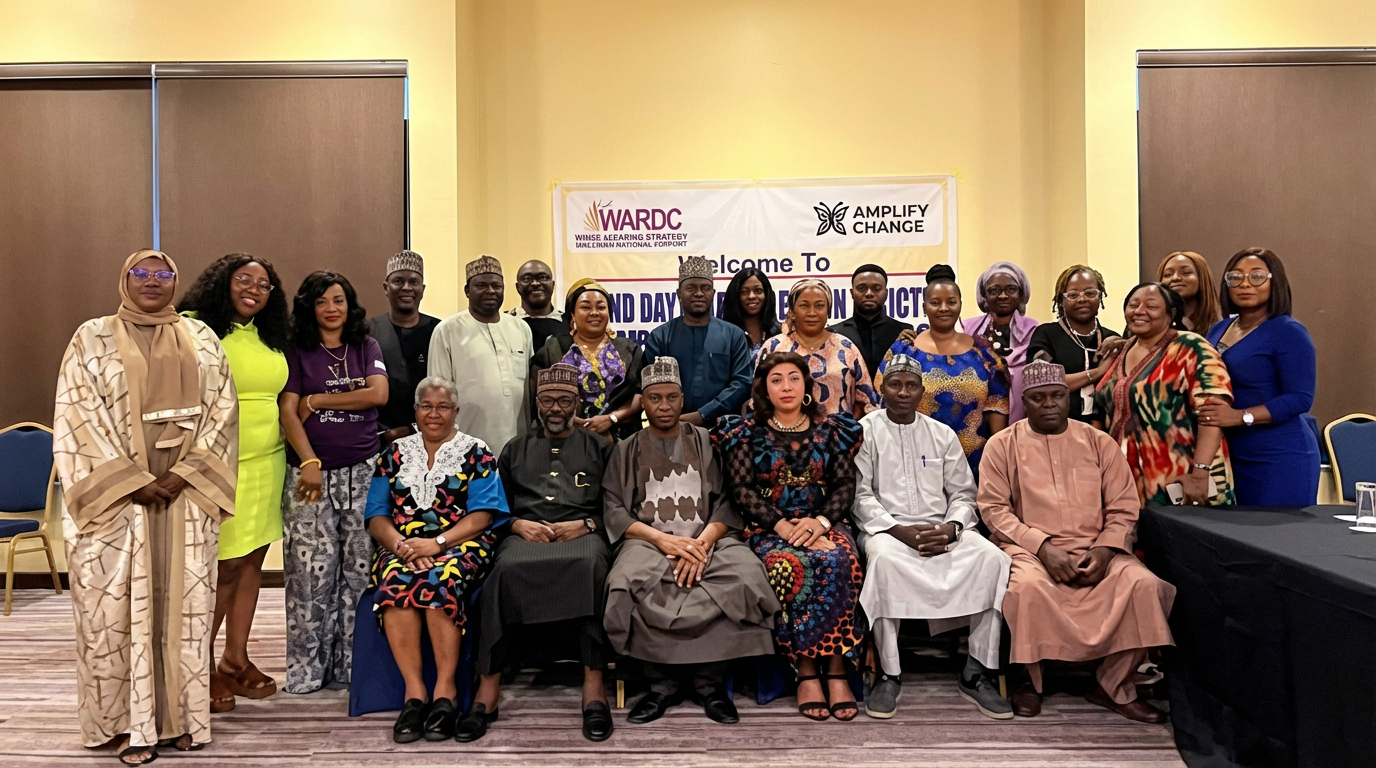
A policy-focused roundtable convened by the Women Advocates Research and Documentation Centre (WARDC), in partnership with Amplify Change, has renewed calls for urgent political, legal and financial reforms to address Nigeria’s persistent Sexual and Reproductive Health and Rights (SRHR) challenges and troubling maternal health outcomes.
The high-level dialogue brought together policymakers, legislators and civil society actors to assess the state of SRHR, examine Nigeria’s maternal health landscape and interrogate why preventable deaths among women and girls remain prevalent despite existing policies and legal frameworks.
Speaking during the session, Executive Director and Board Secretary of the Gender Equality Peace and Development Centre (GEPaDC), Professor Patricia Donli, argued that Nigeria’s major SRHR challenge lies not in policy gaps but in weak political will and inadequate, unsustainable funding.
According to her, while SRHR has been extensively discussed, meaningful progress depends on concrete action by decision-makers. She noted that longstanding commitments, including the Abuja Declaration’s recommendation that 15 per cent of national budgets be allocated to health, have largely remained unmet in practice. “What is announced on paper is often not what is released. Without health, we cannot achieve anything,” she said.
Donli also criticised a system in which political leaders are detached from domestic healthcare realities through medical tourism, arguing that this undermines accountability and urgency in health sector reforms. She further highlighted weak public awareness, poor monitoring of health spending and inconsistent regulation as factors worsening outcomes, stressing that women continue to die daily from preventable causes. She called for stronger government–civil society collaboration to track health financing and enforce accountability.
From the legislative perspective, Speaker of the Gombe State House of Assembly, Muhammad Abubakar Luggerewo, said SRHR is treated as a core governance issue in his state, particularly within primary healthcare delivery. He outlined investments in revitalising health facilities across the state’s 114 wards, noting that each ward has at least two functional, well-equipped primary health centres operating кругл-the-clock.
Addressing concerns about women’s access to healthcare in northern Nigeria, Luggerewo described perceptions of systematic denial as overstated, emphasising that Gombe State has enacted enabling laws and is harmonising its legal framework to strengthen health and social protections. He also highlighted the state’s health insurance scheme as a model for universal health coverage.
Offering a gender-responsive and rights-based viewpoint, Chief Whip of the Ogun State House of Assembly and Chair of the House Committee on Women Affairs, Bakare Omolola Olanrewaju, underscored the national importance of SRHR conversations. She called for early and sustained public education, noting that SRHR issues can affect anyone, regardless of background.
Drawing from her professional background as a nurse, Olanrewaju said healthcare remains central to her legislative focus, citing constituency-level interventions such as the construction of a health centre and provision of health insurance. On the issue of safe termination of pregnancy, she called for urgent legal reform, particularly in cases of rape, incest and exploitation, arguing that existing laws fail to protect women’s mental and physical wellbeing.
She also appealed for stronger female representation in national decision-making, stressing that women’s lived experiences must inform laws affecting maternal health. “We cannot continue to lose our mothers and daughters,” she said.
Representing Jigawa State, House of Assembly member Haruna Aliyu highlighted legislative measures already in place to protect women and children, including the Violence Against Persons Law and the Child Rights Act. He explained that the legislature maintains oversight of implementation through collaboration with the executive and relevant ministries, adding that while no new SRHR-specific bills are currently before the House, related legislation is under committee review.
The roundtable concluded with broad consensus that Nigeria’s maternal health and SRHR crisis is fundamentally a governance challenge. Participants agreed that without genuine political commitment, adequate financing, coherent and humane laws, and sustained accountability, preventable maternal deaths will continue to undermine national development and human rights obligations.